
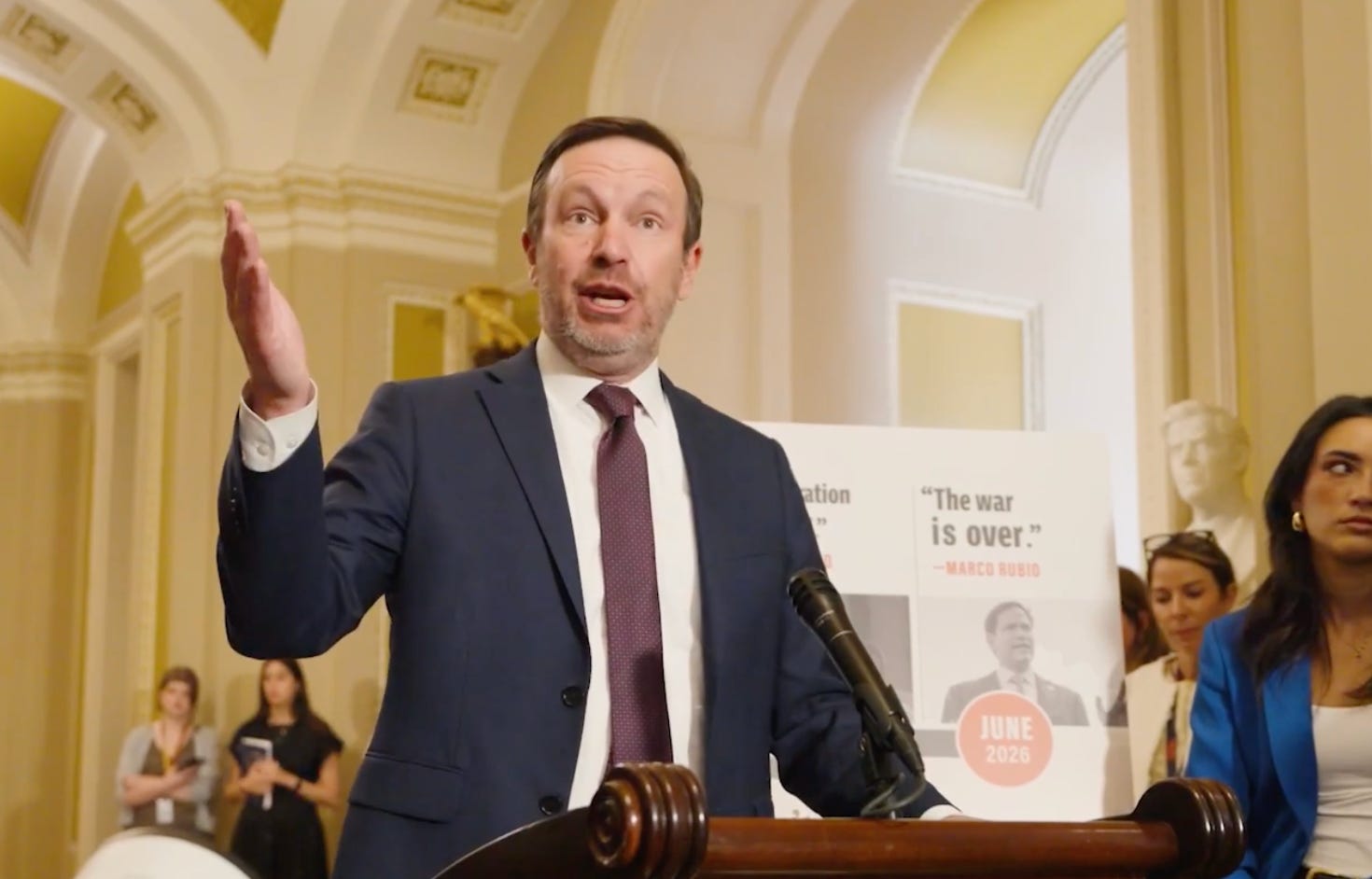
The minute President Trump announced a Memorandum of Understanding with Iran on Sunday to “end the war,” the response from Democrats has been a range of somewhat decent—if tortured—support for an end to hostilities to cynical, goading attacks from the right. This is a fairly common feature of our bipartisan pro-war Washington consensus: We are permitted to debate the timing and process of attacking Iran, but never its legitimacy, morality, or legality. It is simply taken for granted by leaders of both parties, and of course the vast bulk of US media, that it is the US’s divine right to bomb and sanction any country at any time for any alleged crimes we, unilaterally, determined it committed. In the case of Iran, this involves some combination of “funding terror” or “proxies,” processing supposed “nuclear ambitions,” and having the temerity to fire back when the US attacks its sovereign territory. The response by liberals stateside to these alleged transgressions is not to call for the strengthening of international law, or UN-directed diplomacy, but to reinforce the central premise that the US is the global police man whose job is to sort out the world into good guys and bad guys. And what matters, more than anything, is the competency and efficacy of disciplining those who both parties agree is A Bad Guy.
The worst and most shameless example of a right-wing attack came, predictably, from Sen. Cory Booker. He accosted Trump for “releasing billions of dollars to this enemy,” which, Booker insists, Iran will use to “fund their terrorist proxies.”

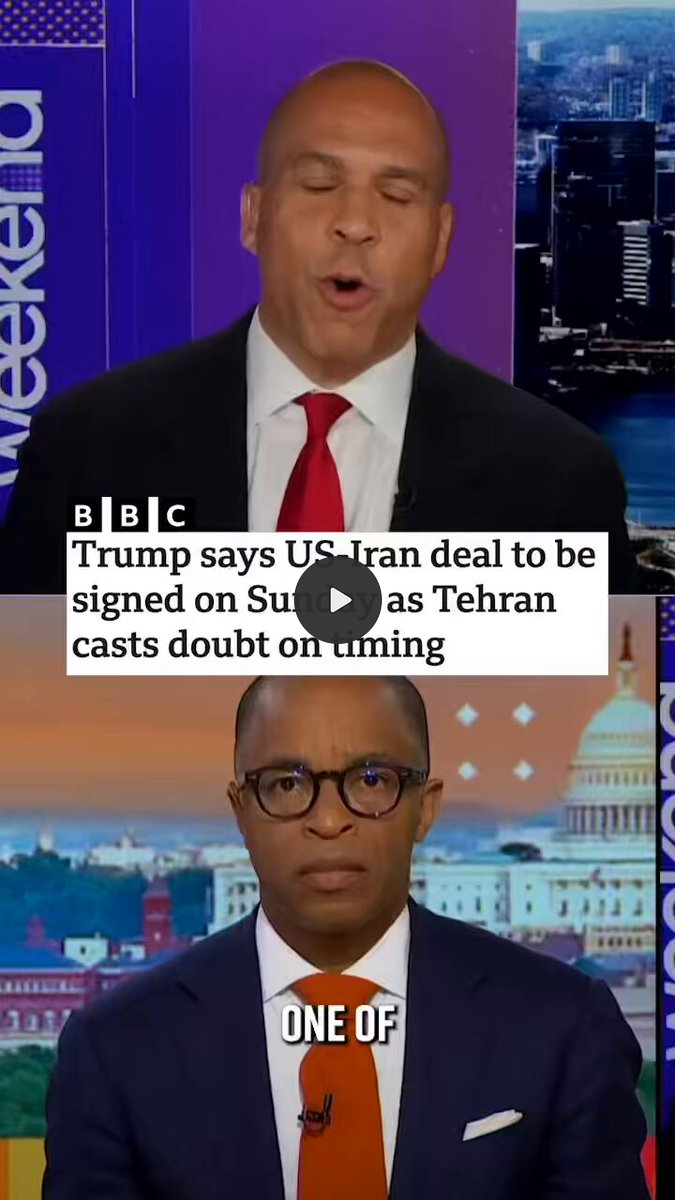
What Booker is demagoguing against here is the same thing the Right demagogued against Obama: returning money to Iran that the US stole from it. This should be a welcome development, as this is an eminently reasonable demand given that Trump sneak attacked Iran and killed over 3,000 of its people, including over 150 in a girls school. Of course, Iran needs some type of recompense for this unprovoked attack. Trump agreeing to this sensible demand is a good thing that should be encouraged and defended as such, not presented as a Give Away To Terrorists.
Similarly:



Chris Murphy gave a critical speech Tuesday afternoon that, in addition to benign talking points about rising gas prices, doubled down on attacks premised on exaggerating the threat from Iran:
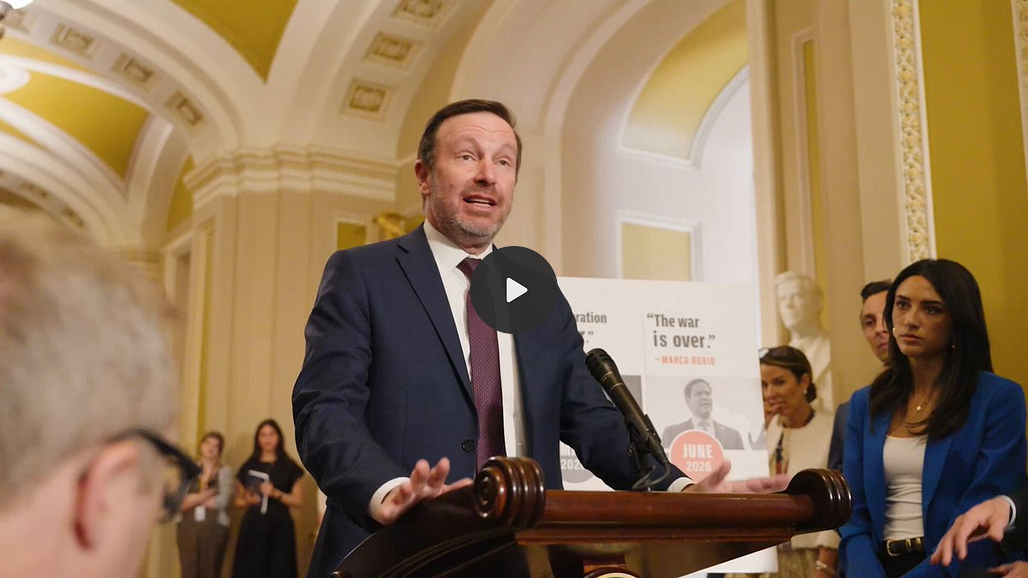
And this is the issue. All of these criticisms uncritically accept the premise that Iran is both ontologically evil and that it’s the US’s god-given right to discipline the country for its transgressions. And the way this is done is not by strengthening international law and equally applying the same standard to every country—including Israel and the U.S.—but by exceptionalizing Iran and scandalizing, in tabloid terms, fairly banal self-defense systems and demands for war reparations.
Anyone hand-wringing over Iran maintaining its ballistic missiles, for example, after it’s been attacked without provocation by Israel and the US a half dozen times in recent years, is not a serious person. There is nothing out of the norm with this, and liberals ought not act like Iran’s maintaining these capabilities is some shameful Neville Chamberlain concession.
Let us make clear some obvious points: Trump is primarily responsible for the criminal attack on Iran. He should never have torn up the 2015 JCPOA which, while it was achieved through brutal sanctions, was still obviously preferable to an attack on Iran that murdered thousands. Democrats are right to be frustrated and annoyed by the blatant hypocrisy of Republicans destroying the JCPOA, killing over 10,000 people, including more than 1,000 children in Iran and Lebanon, then reverting back to many of its key premises. This frustration is understandable. But vapid gotchaism, while scoring temporary political points, in the long run reinforces dangerous right-wing premises that narrow political space to support the current settlement proposal, and set the table for perpetual hostility towards Iran in the coming years.
Those engaging in this line of attack would argue that it’s a tough balance, but there’s no reason to believe that it’s a balance really worth attempting. The reality is we have zero evidence these types of process criticisms—whereby Democrats prop up all the premises for war, insist it’s a “disaster” in terms of execution, sometimes meekly concede a deal is still vaguely a good thing, then goad Trump for “surrendering”—are even good politics. Where is the polling that supports this? What is the basis of this conventional wisdom? It’s simply taken for granted. It’s just assumed that Democrats must score political points on Trump’s “failure.” But, like with attempted right-wing triangulation on immigration, there is a distinct risk all it does is prop up the bellicose premises that will, in the aggregate, serve the Republican Party, which routinely scores higher in polls when it comes to “national security.”
The reason this posture is popular is not because we have any evidence it plays well with voters. It’s popular because it hits what I call The Jake Tapper Sweet Spot, the most coveted posture in Washington for politicians and reporters alike: look like you’re Speaking Truth To Power while propping up the core ideological premises of our permanent security state. Appear anti-Trump while smuggling in deeply problematic assumptions about Iranian motives and “nuclear ambitions.” In other words: it plays well with party elites and donors—namely pro-Israel donors.
It’s also bloodless and confused messaging. Trump is “surrendering,” but it’s a good thing he’s surrendering? Surrendering is broadly seen as a pejorative—the baiting of which typically implies better terms, through force or the threat of force, ought to be sought. But now it’s good? What?
Generously, one could argue that Democrats need to show what a “failure” Trump’s war was, and the only way to do that without upsetting the axioms of the US war consensus is to insist that his attack only “made Iran stronger” and “emboldened its leaders,” thus an ostensibly antiwar message sets the table for future hostilities. “Trump failed at regime change and now Iran is 10 times more evil” may sound cute on MSNBC, but, in the long term, carries very obvious risks for sustained diplomacy and US restraint. This language is indistinguishable from the far-right, Likudite rhetoric emanating from think tanks like Foundation For Defense of Democracies and Nikki Haley for a reason: because it’s fundamentally—in effect, if not intent—an attack from the Right.
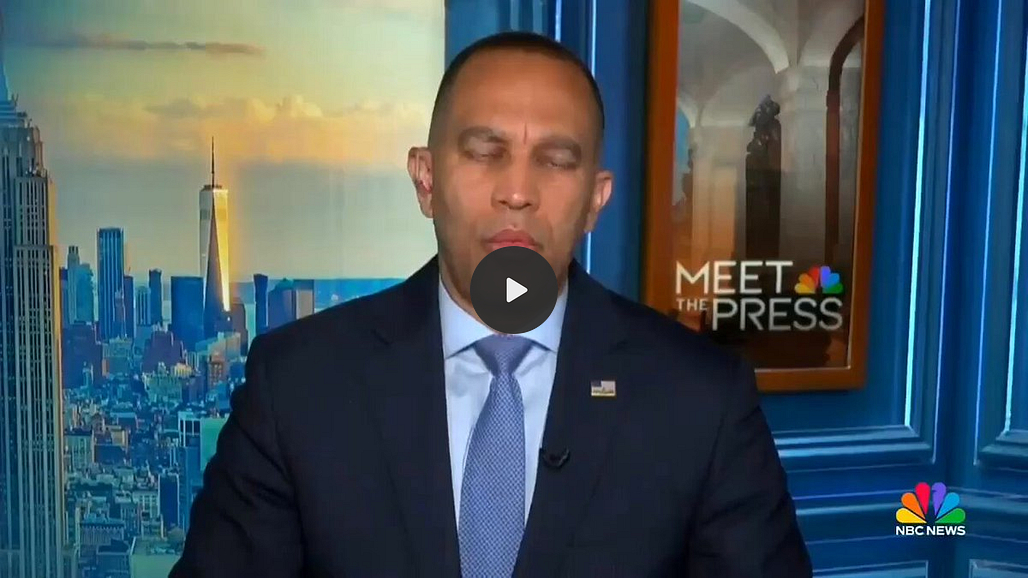
This hawkish posture aligns neatly with Democratic leadership’s broader approach of propping up every premise of Trump’s Iran attacks, quibbling over their execution and process, while only leveling sleepy, belated criticism. As I noted at the time for The Nation, House and Senate minority leaders Hakeem Jeffries and Chuck Schumer (Schumer, it’s worth noting, is the sole remaining Senate Democrat who opposed the 2015 Iran Deal) took eight full days to object—entirely on process grounds—to Trump’s pending attack on Iran after it was first signaled with a massive military buildup on February 18, 2026. Then Jeffries, after being forced to take a position by Reps. Ro Khanna and Thomas Massie, planned a War Powers vote for the week after the attack ended up taking place on February 28, 2026.
This de facto hawkish posture from Democratic leadership, where inertia and Trump do their dirty work for them, is consistent with a broader plan that emerged during the first Iran attack in June 2025. At the time, after word got out that Trump may enter a settlement with Iran, Sen. Schumer issued a widely-criticized mockery of the president for folding to the Iranians and “letting them get away with everything”:

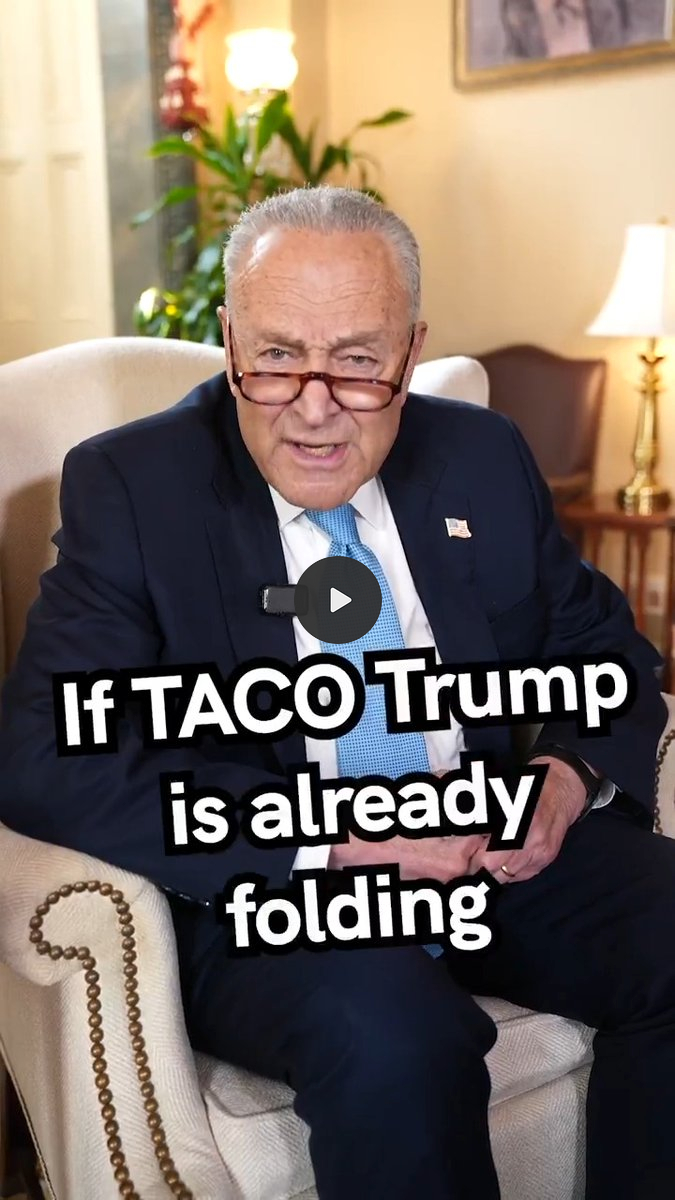
In response, two dozen antiwar groups sent a letter demanding Schumer delete the counterproductive taunt. As Drop Site News reported in February:
The letter led to a phone call between one of the letter’s organizers and the top foreign policy aide to Schumer, who laid out the thinking of many Democrats in the Senate. The organizer who took the call agreed to share details of the conversation in exchange for anonymity. A congressional source briefed on the call shortly afterward confirmed the details. The foreign policy aide, whom Drop Site agreed not to name, explained that a substantial number of Senate Democrats believed Iran ultimately needed to be dealt with militarily. But those Democrats, the aide explained, also understood that going to war again in the Middle East would be a political catastrophe. That’s precisely why they wanted Trump to be the one to do it. The hope was that Iran would take a blow and so would Trump—a win-win for Democrats.
This is roughly what ended up taking place. Trump did the unpopular work, Democratic leadership sat idly by, propping up the attack’s central premises while distancing themselves from its unpopularity with mealymouthed process critiques. As predicted, the war was a catastrophe and now Democrats are attempting to exploit this fact to score midterm political points in the only way they are permitted to do so: from the Right.
A far more sober and rational response is that coming from Rep. Ro Khanna, whose rhetoric is more measured and less concerned with goading and macho-baiting Trump, and clearly designed to create political space for a finalized peace deal.

It’s a fine line between acknowledging the war failed on its own terms, and promoting those terms, as such. Democrats, especially those who view themselves as “progressives,” don’t need to overcorrect and promote the latter. They ought not do AIPAC’s bidding to score a slick gotcha. The stakes are too high, the forces of war too powerful and ever-present. What’s needed is to open up space to support the MOU, as unnecessary and stupid as its antecedents may be. And if one wants to torch Trump they should absolutely do so, but do so by detailing his war crimes, wrecking of the global economy, the illegality of the attack and centering the actual victims in Iran and Lebanon, not seeking to further demonize the war’s nominal targets and propping up its entire logic by insisting The Official Bad Guys are actually more powerful and sinister than ever.